Key Takeaways
- A scratch sits in the lens surface or its coating, so the damage stays put.
- Coatings go on during manufacturing, which means scratch-resistant treatment has to be requested when you order.
- Toothpaste, baking soda, and household glass cleaners can strip coatings and cloud your lenses.
- New lenses can often be fitted into the frames you already own.
- A hard case, lens spray, and a microfibre cloth help keep new lenses clear.
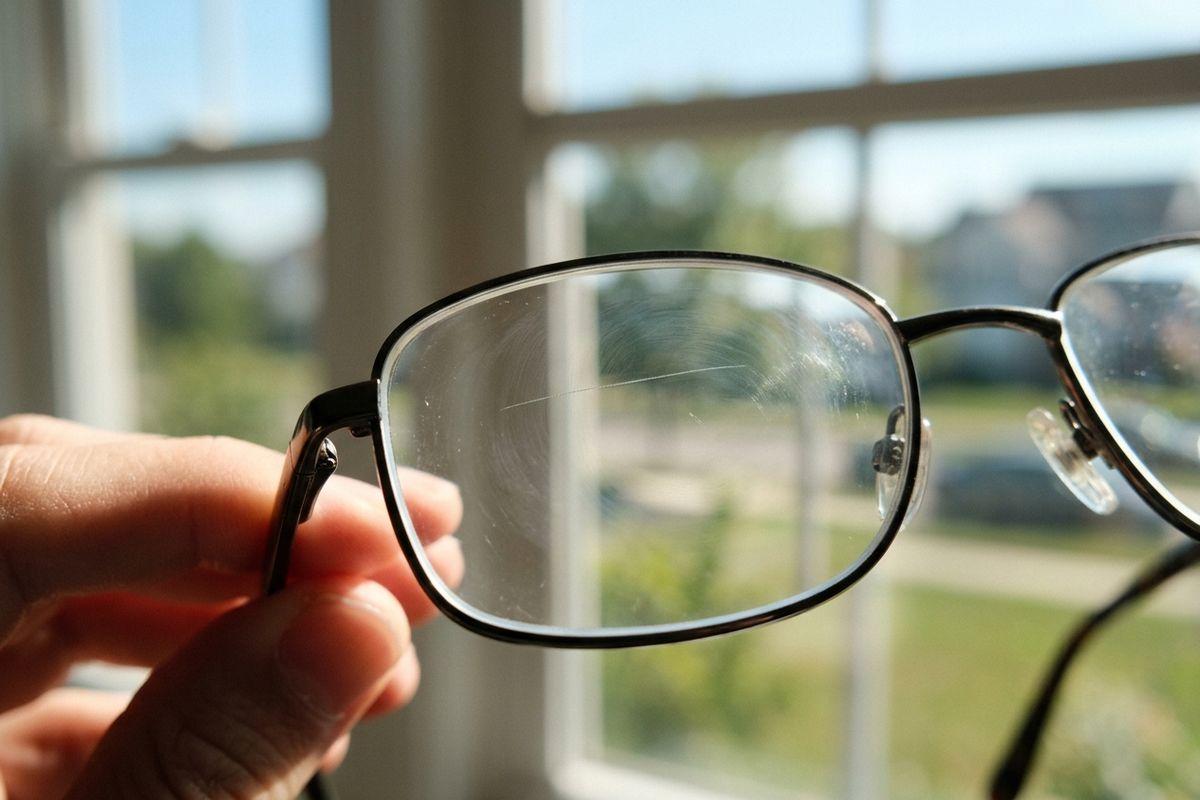
You slip your glasses on, look toward a window, and there it is. A thin white line crossing your view, catching the light every time you turn your head. You wipe the lens. It stays. Our team at Airdrie Family Eye Doctors hears about this often, usually from someone who has already tried polishing the mark out of their lenses.
You can’t buff out scratches because the mark sits inside the lens surface or the coating layer, and no polishing brings that material back. Buffing scratches out of your lenses could also alter the prescription, potentially causing even worse issues.
What a Scratch Actually Does to Your Lenses
A scratch in your line of sight scatters light instead of letting it pass through cleanly. That can show up as blur, halos around headlights at night, or a dull ache behind your eyes after an afternoon of screen work. Small marks near the edge may go unnoticed, while a scratch right in the middle sits in the path of everything you look at.
Why Lenses Scratch Easier Than You’d Think
Most scratches build up slowly through daily habits. Dust and dirt settle on the lens, and wiping them away with a dry cloth drags those particles across the surface.
The shirt hem you grab in a hurry, the tissue in your coat pocket, the paper napkin at lunch. All of them work like fine sandpaper against a lens.
How Prescription Lenses Are Made and Coated
Your lens starts as a blank shaped to match your prescription, then it’s finished and edged to fit your frame. Coatings are applied during that manufacturing process, layered onto the lens before it ever reaches your hands.
Nothing can be added later at the counter. Therefore, scratch-resistant treatment needs to be requested when you place your order, not after you notice the first mark. However, it is important to note that there are no “scratch-proof” coatings. Even with scratch-resistant coatings applied to your lenses, you still need to treat your glasses with care.
Common Coatings You Can Ask About
Common coatings include:
- Scratch-resistant treatment for everyday handling.
- Anti-glare coating for night driving and screen time.
- UV protection.
- Tints, if you want a lighter or darker lens.
Why Home Remedies Don’t Work
The internet is full of tricks, and they tend to make things worse. Toothpaste contains abrasives designed to scrub enamel, so rubbing it across a lens strips the coating and leaves a haze of tiny new marks.
Baking soda paste works the same way, clouding the surface and roughing up the finish. Sandpaper, melamine sponges, and car wax get suggested too, and each one adds damage without touching the original scratch.
What Happens When Coatings Come Off
Once a coating lifts, the protection goes with it. You lose the UV filtering and glare control you paid for, and the lens turns cloudy and dull. Cleaning becomes a chore because smudges cling to a stripped surface instead of wiping away.

What Your Optical Team Can Do About Scratched Lenses
Bring your glasses in, and our team can take a proper look under good light. Sometimes what feels like a scratch turns out to be dried spray residue or debris caught along the edge, and a proper cleaning clears it up.
When it really is a scratch, new lenses can usually be cut to fit the frames you already like wearing. Our team can also adjust the temples and nose pads so your glasses sit securely.
When It’s Time to Replace Lenses
It may be time for a lens upgrade if:
- Scratches sit right in your line of sight.
- Vision still feels blurry after a proper cleaning.
- The lens looks hazy or hard to see through in bright light.
How to Keep New Lenses Scratch-Free
Here is an easy rhyme to remember: when they are not on your face, they are in your case. Also, never rest them lens-down on a surfacde. A quick spritz of lens spray and a microfibre cloth handles daily cleaning without dragging grit across the surface.
Skip the dashboard on hot July afternoons, and leave household glass cleaner for actual windows. Those products contain ingredients rough on lens coatings.
Questions to Ask Before You Order
Think about how you actually spend your days. If you’re outside on a job site or at a screen for 8 hours, different coatings suit you better than someone reading a few pages at night.
Ask about lens materials too, especially for kids and anyone playing sports, since some materials handle impact and rough handling differently. We can walk you through the choices before anything gets ordered.
Talk It Over with Our Team
Scratched lenses don’t have to mean squinting through summer glare for another season. Our team at Airdrie Family Eye Doctors can check your current pair, talk through coating options, and help you find lenses suited to your routine.
Book an appointment and bring your glasses along.