Have you noticed your child squinting to see the board at school, sitting super close to the TV, or holding books up near their face? If their glasses prescription seems to get stronger every year, you might be wondering if there’s a way to slow things down.
Myopia, or nearsightedness, is common in children, and as the team at Airdrie Family Eye Doctors knows, managing its progression is a key part of their long-term eye health. It all starts with regular children’s eye exams to monitor their vision.
Atropine eye drops are a treatment option that can help slow the progression of myopia in children by relaxing the focusing mechanism in the eye to manage the eyeball’s growth. This approach doesn’t reverse nearsightedness, but it can help control how quickly your child’s vision changes over time.
What’s Myopia, Anyway?
Myopia, often called nearsightedness, is a vision condition that makes it hard for you to see distant objects clearly. It typically develops during childhood when the eyeball grows a little too long from front to back, causing light to focus in front of the retina instead of directly on it.
Why Slow Myopia in Kids?
Slowing down how quickly your child’s myopia progresses is important. It can help reduce their dependence on stronger and stronger glasses as they grow. Managing myopia early may also help lower their chances of developing certain eye conditions later in life, such as:
- Glaucoma
- Cataracts
- Retinal detachment
Catching it early with a solid myopia management plan is like giving their eyes a little head start for the future.
The Role of Atropine Eye Drops
Atropine eye drops are one available option for a myopia management program in children. It’s important to know that these drops don’t correct vision on their own, but they are a tool that can help manage how quickly nearsightedness progresses.
How Atropine Works on the Eye
While the exact process is still studied, atropine is thought to work by slowing the stretching and growth of the eyeball. By relaxing specific muscles inside the eye, the drops help control the physical changes that cause myopia to worsen.
Low-Dose Drops for Fewer Side Effects
Most kids use low-dose atropine, usually between 0.01% and 0.05%. These tiny doses are effective at slowing myopia, but with minimal side effects, so your child can continue their daily adventures without hassle.
The Atropine Treatment Process for Your Child
If an eye doctor suggests this treatment, you’ll find the process is straightforward and easy to fit into your family’s daily routine. It’s designed to be simple and non-disruptive.
What to Expect Day-to-Day
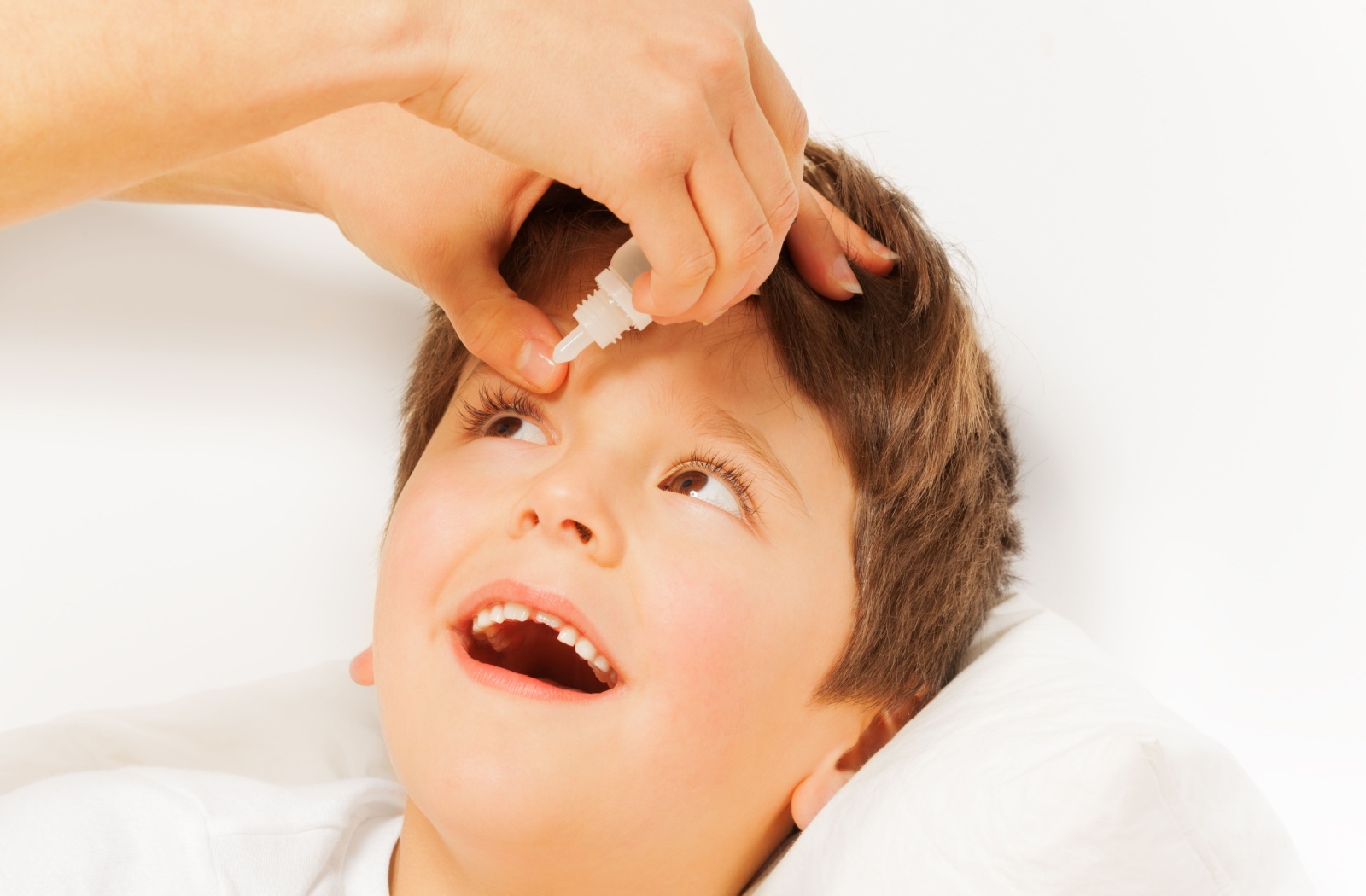
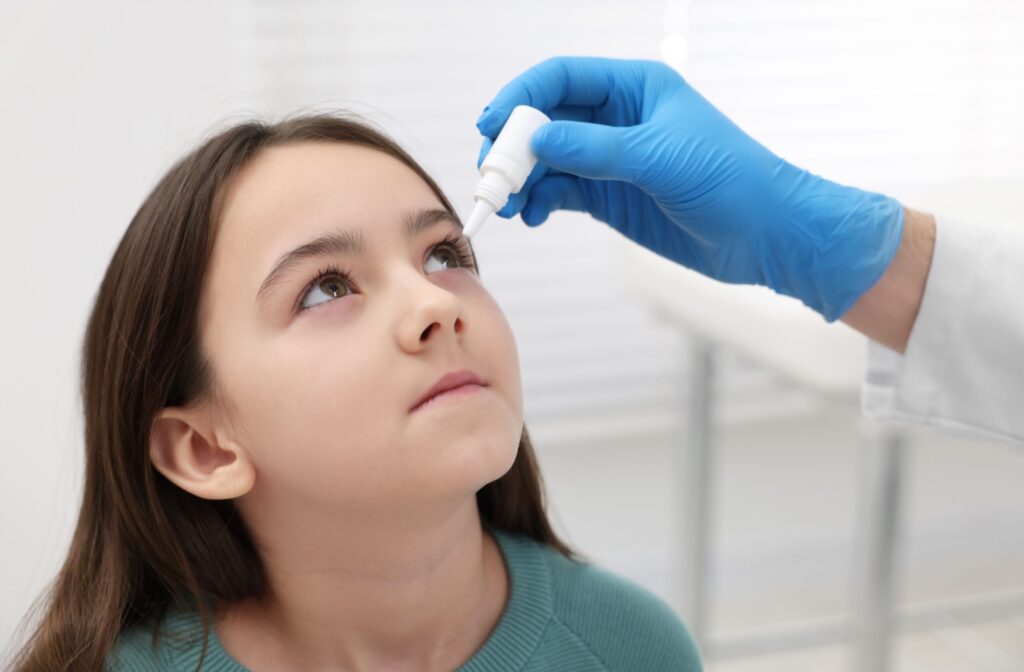
The treatment usually involves putting one drop in each of your child’s eyes every night before bed. Remember, these drops manage progression, so your child will still need to wear their glasses or contact lenses to see clearly during the day.
How Long Does Treatment Last?
A typical treatment plan may last for 2–3 years. Your eye doctor will schedule regular checkups to monitor your child’s eyes and confirm that the plan is working as intended.
Atropine Eye Drops and Your Child’s Safety
When prescribed by an eye care professional and used correctly, low-dose atropine is a safe option for managing myopia in children. The focus is always on your child’s comfort and well-being.
A Look at Safety and Side Effects
Low-concentration atropine has been used for children aged 4–14. Because the dose is so small, side effects are not common. Some children may experience mild light sensitivity or slight blurriness when looking at things up close, which can often be managed.
The Big Picture: What Atropine Can (and Can’t) Do
It’s helpful for you to have clear expectations about what atropine eye drops can achieve for your child’s vision. Understanding the goals of the treatment is the first step.
The Goal Is to Slow Progression, Not Cure It
Atropine treatment does not stop or reverse myopia. Its goal is to slow down how quickly your child’s vision changes. Think of it like a gentle pause button—helping your child’s eyes grow steadily rather than racing ahead.
How to Know if It Works
Success is measured over time. Your eye care team will track changes in your child’s prescription and the length of their eyeball at follow-up appointments. This data shows how well the treatment is helping to manage their myopia.
Keeping Your Child’s Vision Healthy
At Airdrie Family Eye Doctors, we love helping kids see clearly while having fun along the way. From regular checkups to myopia management, our focus is always on comfort, safety, and a positive experience.
Curious if atropine eye drops could help your child? Book an appointment with our friendly team today—we’ll guide you through every step with care and compassion.